













From Data to Decisions: Using Assessment to Improve Teaching Effectiveness
During assessment discussions with schools, I rarely encounter situations where data is missing. Usually it's the opposite. Quiz, assignment, benchmark, gradebook, report, and dashboard generated quite a few numbers before we even started the meeting.
A teacher can know what percentage his class just scored on an assessment. Academic Head can open reports by grade or standard. School Leader can even see the trends of an entire group of students. The more difficult thingStart after everyone has seen those numbers: What will this data change in the classroom?
This is where I often want to go deeper when reviewing with a school team Assessment in K–12 education.A dashboard can be very beautiful, but if the teacher closes it and then still has to guess which part to reteach tomorrow, which student group needs toaddpractice or who is ready to move on, assessment still does not support much instruction.
Assessment should appear throughout the learning process
A familiar way to use assessment is when the teacher finishes teaching a unit, students take a test, scores are entered into the gradebook, then the class moves on to the next unit. This method still has a role, especially when schools need to summarize results at a certain time, but it gives teachers relatively little opportunity to change what is happening while students are still in the middle of the learning process.
In the classroom, assessment is more useful when placed into an ongoing cycle:
Determine the starting point➜Instruction➜Check your understanding➜ Dadjust➜According to dohi progress
Sometimes the teacher just needs a quick check in the lesson to know if the whole class has understood the concept. There are times when Academic Head needs benchmark data to see progress over a longer period of time. Another assessment is used to identify learning gaps before students enter intervention or personalized learning.
Different purposes mean different ways to read data. So when reviewing assessments, I often want to know clearly what question each assessment is answering before looking at the number of reports the platform provides.
For Teachers, data needs to lead to a decision that is specific enough for the classroom
Suppose a class has 25 students. After an assessment, the teacher found that eight students were having difficulty with the same standard, ten students had reached the expected level and seven students could handle the task at a higher level. Those three numbers show where the class is, but the instructional value lies in the decisions that happen afterward.
Teacher may need to answer:
·GroupWhich students need reteaching?
·Which group just needs more practice before moving on?
·Does any student need to return to a prerequisite skill?
·Which group is ready for the more difficult task?
·Are there any students who need personalized support or intervention?
·Does Curriculum currently have any resources suitable for each learning gap it has just discovered?
This is why I like the way of thinking about actionable data.Useful data doesn't need to appear in dozens of charts; Teachers need to be able to see a pattern clearly enough to decide on the next lesson, appropriate grouping or support.
There is a big difference between knowing “students scored 62%” and knowing “this group of students is having difficulty with a specific skill, here is a resource that can be used to reteach and here is a way to test again later”. The closer you get to the second level, the more valuable the assessment becomes in the classroom.
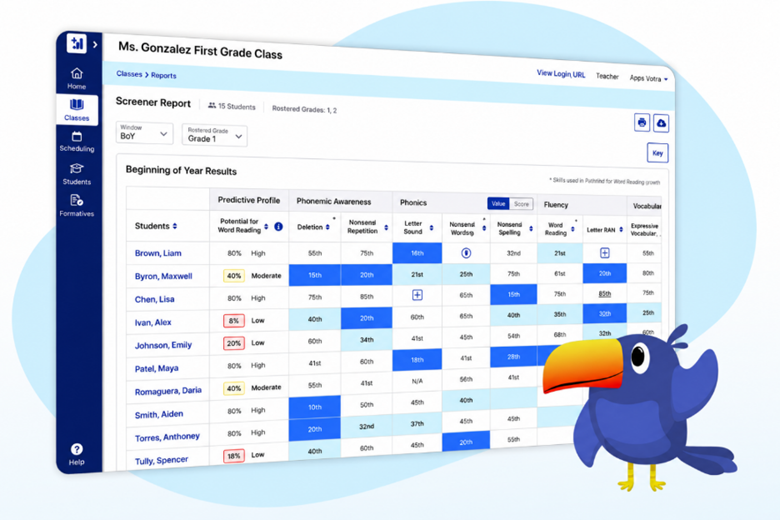
The Academic Head needs to see patterns that are difficult to see in an individual classroom
Teachers often look at data at the student and class level. When you reach Academic Head, the picture begins to get broader. A learning gap that appears in a class may just be related to pacing, student profile, or how that lesson is implemented; The same gap appearing in four or more grades is worth a closer look.
During data review sessions, Academic Head's questions often turn to:
·Are there any standards that are weak in multiple classes at the same time?
·Does Scope & Sequence place a concept too early or too late?
·Is a unit being deployed faster than student readiness allows?
·Are there any instructional approaches that teachers need more support?
·Should this learning gap be addressed in the classroom, by grade, or with a separate intervention?
·After adjusting the instructions, will the data in the next assessment change?
This is when assessment begins to play a role in academic management. Academic Head can use data to review pacing, planning, teacher support or curriculum alignment, instead of just summarizing final results.
I also find data most useful when the team can return to the same problem several weeks later. If a weak skill was discovered, the teacher adjusted the instruction and the next check showed progress, and the school team began to have a relatively clear feedback loop. If results remain largely unchanged, that's a signal to look deeper into curriculum, intervention, or implementation.
School Leaders need another layer of information
The Principal or School Director usually does not need to open each student response to know why sentence number 7 is incorrect. They need a broad enough perspective to understand how the program is working, which student groups need more resources, and whether what the school is investing in will produce progress over time.
At the School Leader level, an assessment system should support questions such as:
·How is student progress changing over the semester or school year?
·Which grade or student group is in need of additional support?
·Are there learning gaps that appear repeatedly across multiple classes?
·Is implementation relatively consistent between schools?
·Are the resources being invested in curriculum, training or intervention in the right place?
The same dataset can therefore serve multiple decision levels. The teacher wants to know where to adjust the next lesson. Academic Head looks at alignment, patterns and instructional support. School Leader cares about progress, consistency and resource allocation.
A single dashboard can contain all those numbers. Its value depends a lot on whether each role can see the correct layer of information they need.
When Assessment, Core Curriculum and intervention must talk to each other
A situation I encounter quite often in edtech is that a school team has many good systems but the data and workflow are in different places. Curriculum is deployed on one platform, assessment on another, and then personalized learning or intervention on a third system. Each product can do its own job well, but Academic Head and teachers must connect the results between them.
Regarding instructional logic, I often look at the process in terms of flow:
Core Curriculum➜Assessment➜Data➜Instructional Response➜Personalized Learning / Intervention
Core Curriculum shows what students are being taught and where learning expectations lie. Assessment helps teachers and Academic Heads see the level of achievement. The data then needs to lead to a sufficiently specific instructional response: reteach, additional practice, regrouping, enrichment or intervention.
That is also the logic BooksVN is using when building configurations according to each level of school needs. A school team can start with Core Curriculum, then add Assessment when a more clear data layer is needed. Personalized learning or Supplemental & Intervention is considered when the school has identified learning gaps and the roles that these components need to play.
Such an implementation also helps avoid the situation where the school team has to buy a very large ecosystem from day one and then figure out where each component will be used.
Assessment can also become part of the workload if the measurement field is too much
Teachers often realize this sooner than anyone else. When assessment is too frequent, the classroom may spend a lot of time measuring learning and less time on reading, discussion, problem solving, writing, or activities that create learning in the first place.
In an assessment plan, the Academic Head should look at both the amount of data and the cost of instructional time to create that data.
Some questions worth considering include:
·What purpose does this assessment serve?
·Is the current frequency necessary?
·How much time do students need to complete?
·What kind of data does the teacher receive afterward?
·Are the results returned to the classroom quickly enough to be valuable for instruction?
·Is there an assessment that is generating data similar to another existing assessment?
A quick formative check of a few minutes can be very useful in a lesson. Longer benchmark assessments have a different role. What needs to be avoided is that many assessments coexist and the school team no longer clearly remembers why they are collecting each layer of data.
A reasonable assessment plan is often created enough data for necessary decisions,At the same time, keep classroom time for instruction and learning.
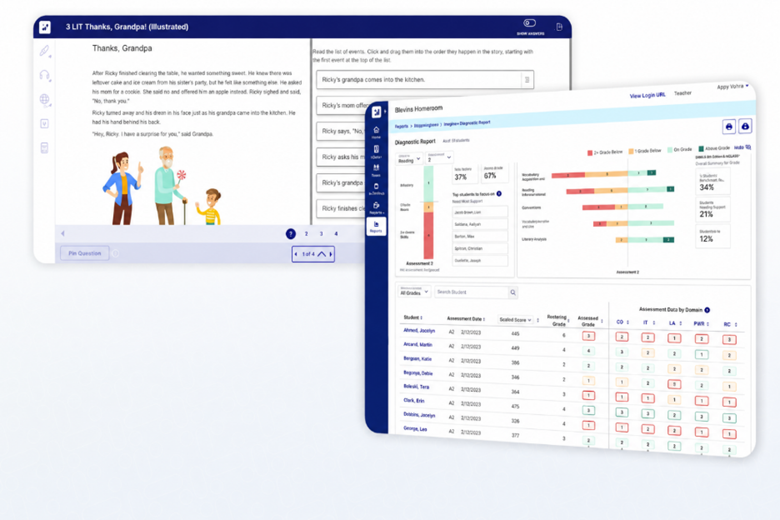
From Assessment to Personalized Learning
Once the data has identified a learning gap, the next question is often how the school team will respond.
Suppose two students are both "below expectations" in Mathematics. One student has difficulty with the prerequisite skills from the previous grade, the other student understands the concept but often makes mistakes in the application step. If both receive the same remedial assignment, the new data is only used to a fairly large extent.
Personalized learning becomes useful when the school team can go deeper:
Measure➜Identify the gap➜Respond➜Monitor progress
Teacher knows which students need support. Academic Head understands the type of gap that is emerging. Students then have access to content or practices that are more suitable to their current needs, and progress continues to be tracked.
This is also the logic that makes Assessment and Imagine MyPath may appear next to each other in some configurations that BooksVN is building. Assessment creates more visibility about student needs; Personalized learning can take care of part of the response when the school model and student profile are suitable for that implementation.
Combining two layers of solutions only makes sense when the school team has clearly defined how assessment data will be used in the instructional workflow.
Schools can start assessment on a small scale
When a school doesn't have a clear assessment framework, I usually don't see much benefit in trying to immediately design a very large system for all grades and subjects. A small pilot often gives the Academic Head and teachers more practical information.
For example, a school might choose:
1 grade or 1 subject
Then go through a relatively simple cycle:
Determine outcomes➜Set baseline➜Teach➜Assessment➜Review data➜ DAdjust instructions➜ Do again
During this process, the school team will quickly discover questions that are difficult to answer in the brochure. How long does it take teachers to use the report? Is the data legible enough? Does an identified gap have the appropriate resources to handle it? Does Academic Head see patterns between classes?
After a cycle or a semester, the school has a more realistic basis to decide to scale to another grade, another subject or add personalized learning and intervention.
For School Leader, this implementation also helps see the value of investment before expanding. With Teacher, it gives time to understand the new workflow without having to change too many things at once.
Ultimately, data needs to make campus conversations better
There are times when the most useful part of an assessment is not on the screen. It appears when the Teacher and Academic Head sit down, look at a group of students and recognize a pattern that each of them had only partially seen before.
Teachers have more grounds to adjust lessons. Academic Head can clearly see where professional learning, pacing adjustment or intervention is needed. School Leaders have better data when making resource decisions. When the school communication model is appropriate, parents can also receive more specific information about progress than just a final score.
Students can also benefit from this use of data. Knowing where you are progressing, what skills are still difficult and what your next goal is helps assessment become closer to learning.
When reviewing an assessment solution, I often come back to a very practical question: After the school team receives the data, what happens next? If the answer is relatively clear at the Teacher, Academic Head and School Leader levels, assessment begins to have a real role in curriculum implementation.
Considering Core Curriculum, Assessment or Personalized Learning?
BooksVN can work with School Leader and Academic Head to review assessment needs, how to use student data and appropriate configuration according to grade, subject and the school's current implementation model. The school can start from a small scope and then expand when there is enough data and practical experience.
Website: www.booksvn.com Email: cs@booksvn.com
Mobile/WhatsApp: +84-915 920 514
Facebook: https://web.facebook.com/BooksVNeBooksachNgoaiVanchinhhang
Zalo OA: https://zalo.me/2230563715259512406


.svg)