













How to Choose the Right US-Standard Curriculum for Your School: What to Review Before Deciding
When a school begins to learn about American-standard programs, the first review sessions are often quite similar. Some people open sample lessons, some people want to see assessments, teachers often go straight to teacher resources. Then the story quickly expanded to print or digital, weekly duration, student English proficiency, teacher training, reporting, cost and even very small details like how a 60-minute lesson will be handled in a 45-minute timetable.
After a while, the team may have a lot of information in front of them but the decision is still not necessarily easier. I have sat in review sessions where both curriculums were well developed, standards were clear, digital resources were abundant, and sample lessons were quite convincing. Looking at a feature comparison table, sometimes they are more similar than people think.
The difference is often more obvious when the curriculum is placed in the school's actual classroom. Which students will learn? What method of instruction is the teacher team currently familiar with? How much time does the program have per week? If implemented continuously for three or five years, how are students expected to progress in reading, writing, reasoning, problem solving and independent learning?
That's usually where I like to start when learning about as a school team US Core Curriculum.
Where is the real "American standard"?
In many conversations, I have noticed that "American standard program" is sometimes understood quite broadly. Books in English, content from the US, or having foreign teachers can all be part of the learning experience, but those factors don't say much about the curriculum behind it.
The part worth examining more closely is how knowledge and skills are built across grade levels, how the program links to academic standards, what students are actually asked to do in the classroom, and whether the assessment is measuring the correct learning outcomes that the curriculum is aiming for.
ELA is an easy example to imagine. In the early grades, students are building a foundation in reading and writing. A few years later, students will not only read longer texts, but will also have to know how to find evidence, build arguments, write for different purposes, listen to other people's points of view, and express their thoughts more clearly. These skills don't appear after a really good lesson; They are accumulated over many school days, including days when the teacher has to return to a concept that the whole class seems to have understood.
Mathematics also has a similar story. A student who knows how to do one type of problem correctly may not understand it deeply enough to explain why that method is correct, or recognize that knowledge when the problem appears in a different form.
Science opens up another type of learning. Maybe a lesson starts with a very small phenomenon, a student question, or a set of data that doesn't show anything obvious yet. They observe, argue, look at evidence and adjust their explanations. Sometimes the first answer is wrong, but the process of finding out why it is wrong is the valuable part of the lesson.
So when reviewing American standard K–12 program,I'm often more interested in how the curriculum builds those learning habits over the years, instead of just looking at a few individual sample lessons.
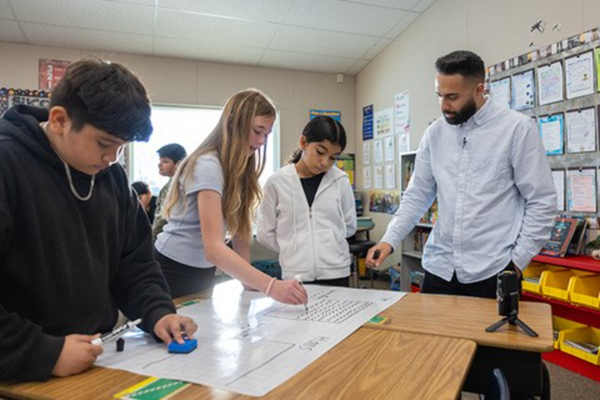
School Leaders should look at curriculum as a system
From the perspective of a School Leader or Director, academic quality is very important, but a good curriculum on paper still has to go through many practical questions before becoming a suitable choice for the school.
•Is the program consistent with the school's academic direction?
An international school implementing a full US curriculum has a different math problem than a bilingual school that only spends a few Mathematics or Science classes in English each week. Some schools want to rebuild core subjects, others are just looking for more assessment or intervention for a specific space.
•CurriculumCan it be implemented with the current teacher team?
A teacher team that is familiar with inquiry, discussion and open-ended tasks will enter a new curriculum that is quite different from a team that has used textbook-led instruction for many years. No one model is automatically better than the other; The starting point is simply different.
•SchoolHow will you know the program is effective?
If assessment is only viewed at the end of the year, the school team will miss out on many opportunities to adjust instruction during the learning process. Student data needs to be close enough to the classroom so that the Teacher and Academic Head can use it when deciding on the next step.
•Afterlicense. licenseis activated, how far will support continue?
Teacher onboarding, professional learning, implementation support and academic follow-up are often not the most prominent parts of a product brochure. But by the sixth or tenth week of school year, these are the things that can determine how good the teacher experience is.
I've come across a niche where I start with a core subject and work on it solidly. Some schools have a relatively stable core curriculum, but assessments do not help the team clearly see student progress. Another school simply targeted the intervention to a specific group of students. Therefore, the same publisher and the same portfolio, two schools a few streets apart may still need two very different configurations.
Academic Head often looks deeper into alignment
An Academic Head often wants to know if the curriculum "connects with itself" or not. Are Scope & sequence, instruction, assessment and intervention working towards the same set of expectations or are each operating according to a separate logic?
In curriculum reviews, the questions I often see appearing are:
• Does the Scope & sequence fit the current school model and timetable?
• Are skills and knowledge developed sufficiently seamlessly across grade levels?
• Is the assessment measuring what the curriculum wants students to achieve?
• When data shows a learning gap, does the teacher have enough resources to adjust instruction?
A flow that is quite easy to visualize is:
Curriculum➜Instruction➜Assessment➜Data➜Intervention
Here, assessment does not stand alone as a testing activity. It needs to return to instruction. A teacher who sees a group of students who do not understand a concept can change the explanation, create small-group work or add practice to the next lesson. Academic Head, looking at a broader level, can see the same gap appearing in many classes or grades.
Assessment in K–12 education becomes useful when data helps the school team know what to do next. There's a lot of data but I still have to sit and look at the dashboard and wonder, "What should I do with this class tomorrow?" The system can only do part of the job.
Teacher side often tells a different story
There was an interesting moment in many curriculum demo sessions. The Student side has been opened quite thoroughly, the sample lesson is beautiful, the video runs well, the interactive activity looks attractive. Then a teacher asked: "Can I see the teacher's side?"
That question often brings the conversation to very practical matters. Where is teacher planning located? Is Rubric available? Is the assignment easy to adjust? Is there an exemplar? Reporting clearly enough for the teacher to see quickly in a day with four or five classes or do we have to spend a separate session to understand?
Teachers do not need the platform to decide instructions for them. They need a curriculum that reduces the amount of work they have to rebuild each night, while still having enough flexibility to tailor lessons to the students sitting right in front of them.
Some days the teacher follows the lesson plan exactly. One day a student's question pulls the discussion in a better direction than expected. There are also days when lessons simply don't run well. Classroom is not a very docile environment so that everything always happens exactly like slide training.
That's why I always want to watch itresources and support for teachersduring reviewcurriculum. curriculum. Teacher resources, differentiation, reporting and professional learning directly affect whether the program can be used long term or not.
Onboarding can show teachers where to log in, where lessons are located, and how assignments are assigned. Instructional practice often takes more time than a Friday afternoon training session. Teachers need to try, encounter some real problems, come back with more specific questions and then gradually make the curriculum a natural part of the classroom routine.

Is it necessary to deploy the entire ecosystem from the beginning?
No.
In many cases, I also do not recommend doing so.
A school building a US curriculum might start with ELA, Mathematics and Science and then spend the first year letting the teacher team really understand the core. As classroom routines become more stable and student data begins to emerge, the school team will have a clearer view of where assessment is lacking, which students need additional support, and what role personalized learning or intervention plays.
For example, a roadmap might start with:
ELA + Mathematics + Science
Then add:
Assessment
And when the need becomes clearer:
Personalized learning, intervention, SEL or online learning
In other cases, assessment may come first. Another place may not need to change the core curriculum. A component is only truly valuable when the school team knows what problem it is solving.
That's also how I usually look at groupsElementary K–5,Middle School 6–8andHigh School 9–12.Gradebandshelps shape developmental expectations and organize curriculum, but even two Grade 6 schools on the same campus can be very different.
Print, digital or a combination of both?
Digital curriculum has clear advantages with assessment, multimedia, reporting and update capabilities. However, print still has its own value in some subject and classroom models.
In ELA, for example, there are classes where placing printed text in front of students is still very useful. They can underline a sentence, write a slightly scribbled note at the edge of the page, and turn back a few pages to check a detail. Teachers walking around the classroom can almost see how students are reading.
Digital at that time still did many other parts well: assignment, multimedia, teacher resources, assessment and reporting.
ThereforePrint + Digital Learningcan simply be a suitable implementation for a core curriculum, rather than being seen as a transitional phase before everything goes to the screen.
Curriculum review continues after the selection date
Curriculum selection usually has a fairly clear ending point on the project plan. The team has reviewed, the decision has been made, the commercial terms are completed and the license is prepared.
Then school year begins.
This is when the curriculum is tested with things that the demo cannot simulate. Teachers will find out which resources they used more than expected and which parts they barely touched. A very reasonable assumption in planning may not be true for a particular class. Some student groups are progressing faster than expected, some groups need more time, some teachers really like the new workflow, and some teachers need a few more weeks to feel comfortable.
Curriculum now begins to become the curriculum of that school itself. Academic model, timetable, teacher experience and assessment data impact how the program is used. A component that was thought to be very important may be used less than expected; A small resource that no one noticed at first has become something teachers open almost every day.
This is also the timeCore Curriculum,AssessmentandSupplemental & Interventionbegin to have more specific roles in the school's instructional model.
Some schools are ready for widespread implementation. Some schools should pilot first. Some teams will benefit from spending more time on teacher readiness before making a major change. Such practical decisions are often not as neat as a comparison table, but that is how curriculum actually lives in the school environment.
So when reviewing a curriculum, which parts are worth looking at together?
After quite a few curriculum reviews, I often go back to some pretty basic points.
Academic alignmentis the first foundation. Standards, scope & sequence and grade progression need to be clear enough for the team to understand where students are being led over the years.
Practical implementation capabilitiesshould also appear in the same discussion. Timetable, teacher readiness, student profile, English proficiency and infrastructure can all change the way a curriculum operates outside of the brochure.
Teacher experienceshould be seen soon enough. Teacher resources, planning, differentiation, reporting and professional learning all directly affect whether the program can be maintained well over many school years.
Assessment and dataThere needs to be a clear connection to the instruction. Data is valuable when the Teacher and Academic Head can use it to decide what happens next in the classroom.
Finallyflexibility. Core Curriculum, Assessment, Supplemental, Intervention, Print or Digital do not have to appear at the same time. Each part needs to have a clear role in the school model and in the problem the school is trying to solve.
No product demonstration or catalog alone can answer all of those questions. To look at a relatively comprehensive curriculum, the school team often has to simultaneously look at student content, teacher resources, scope & sequence, assessment model, reporting, digital platform, print materials, implementation requirements, training, licensing and how all of those components will fit into the actual timetable.
That is also the work that the BooksVN team and I want to do with the school before coming up with a specific recommendation. BooksVN currently works with the Imagine Learning ecosystem and can work with the school team to directly open curriculum, teacher resources, digital platforms, sample materials and implementation options to put them next to the actual needs of the school.
The first conversation doesn't have to end in a buying decision. Many times the most helpful thing is just clarificationWhat does the school have, what is lacking and what really needs to change at this time.
Considering Core Curriculum, Assessment or Supplemental?
If the School Leader, Academic Head or subject team is reviewing the curriculum and needs more information for a comprehensive view before deciding, BooksVN can work with the team to review academic needs, timetable, teacher readiness, assessment, format and appropriate implementation model.
Website: www.booksvn.comEmail: cs@booksvn.com
Mobile/WhatsApp: +84-915 920 514
Facebook: https://web.facebook.com/BooksVNeBooksachNgoaiVanchinhhang
Zalo OA: https://zalo.me/2230563715259512406


.svg)