













Students Know the Formula but Cannot Apply It: Where Does the Problem Begin?
Memorizing formulas is not understanding Math
In many classes, students can read formulas correctly, do exercises similar to the examples fairly quickly, and score well on familiar practice sections. However, just by changing the data, changing the way of asking, or putting knowledge into a real situation, they don't know where to start.
This shows the job remember the procedure is not synonymous with understanding the concept. Students may remember where to substitute numbers but do not understand how the quantities are related, why the formula is formed, and when the formula is actually appropriate.
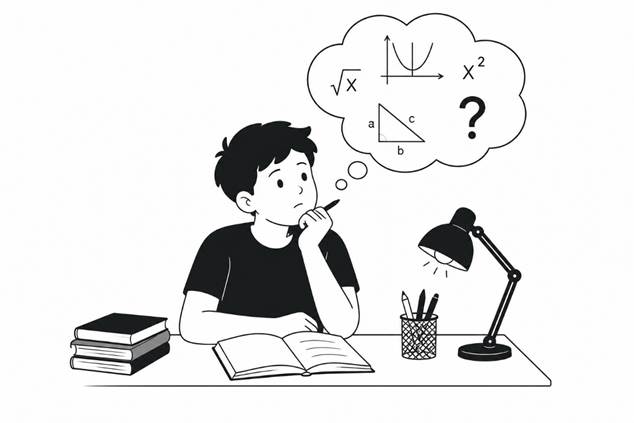
Why are students able to do sample exercises but are confused when faced with new exercises?
When learning is mainly based on observing sample lessons and then repeating steps, students often memorize the appearance of the lesson format. They recognize some keywords, the location of facts, or the order of operations, but have not yet built the network of meaning behind them.
1. Students can only do this when the problem has a structure and presentation similar to the example they have learned.
2. When asked "why do we use this formula?", students just answer "because I teach it like that" or repeat the process.
3. Just by changing the order of data, changing symbols or moving to a new context, students will not recognize familiar knowledge.
4. Students choose formulas based on a single keyword, rather than analyzing relationships between quantities.
5. After having the answer, students do not know how to estimate or check whether the result is reasonable or not.
6. Knowledge is remembered for a short time to take a test but is quickly forgotten when moving on to the next unit.
These signs do not mean a student lacks effort. In many cases, it is the way the lesson is organized, the exercise format, and the assessment that makes students believe that learning Math is about remembering the correct formulas and reproducing the correct steps.

Where is the problem usually located?
A class usually starts with the teacher introducing the formula, doing a sample exercise and asking students to practice many similar exercises. This may help the class complete the lesson quickly, but students have little opportunity to ask their own questions, try out strategies, or recognize the need for a formula before it is provided.
There are four common reasons why knowledge is difficult to transfer to new situations:
1. The formula appears before the problem: students have not experienced a situation that requires a formula, so it is difficult to understand what the formula is describing.
2. Exercises are too similar: students practice pattern recognition more than analysis and strategy selection.
3. Lack of models and many ways of representation: symbols are learned separately from pictures, tables, graphs, manipulative materials, or real-life contexts.
4. Evaluation only focuses on the answer: Students are rarely asked to explain, compare methods or demonstrate reasonable results.
When these four factors persist, students can become proficient with a familiar set of lessons but still lack the ability to self-orient when encountering new problems. Therefore, the goal of teaching Mathematics should not stop at memorizing formulas, but should help students build both conceptual understanding, implementation skills and reasoning ability.
What is conceptual understanding?
Conceptual understanding - conceptual understanding is the ability to recognize the meaning, structure and relationships of Mathematical knowledge. Students not only know how a rule works, but also understand why that rule makes sense and how it relates to what they have learned.
Meanwhile, procedural fluency - procedural proficiency is the ability to perform calculations and algorithms accurately, flexibly and efficiently. These two elements are not opposing. Students need both understanding of the nature and implementation skills, because understanding without practice will make it difficult to create fluency, and practice without meaning will make it difficult to apply.
For example, students can remember the formula for the area of a triangle but only truly understand it when they realize that the triangle can be assembled into a parallelogram or a rectangle, thereby explaining why the product of the base and the height must be half.
The ability to transfer knowledge is the destination
Ability to transfer - transfer represents students' use of learned knowledge in a situation with other data, presentation, or goals. This is the time when students must determine what they know, what they need to find, choose a representation, and decide on the appropriate tools.
A student with transfer ability cannot necessarily solve it immediately. They can try things that don't work, recognize conflicts, adjust their strategies, and explain the reasons for the change. That process shows students doing Math, rather than just reproducing a memorized pattern.
Therefore, teachers and parents should observe not only the number of correct problems but also how students start, how they connect facts, check results and express their thoughts.
Signs that students have begun to understand and apply
As students understand concepts better, they can explain a formula with words, drawings, or examples. They recognize two seemingly different problems that use the same relationship, and know when a formula is inappropriate.
Students can also predict before calculating, using many ways to test and compare the advantages of each strategy. An incorrect but well-reasoned answer sometimes provides more information than a correct answer generated by mechanically changing numbers.
To create these expressions, the lesson needs to give students the opportunity to approach the problem before receiving the complete process. Children need to observe, hypothesize, try to perform, discuss and synthesize what they have discovered.
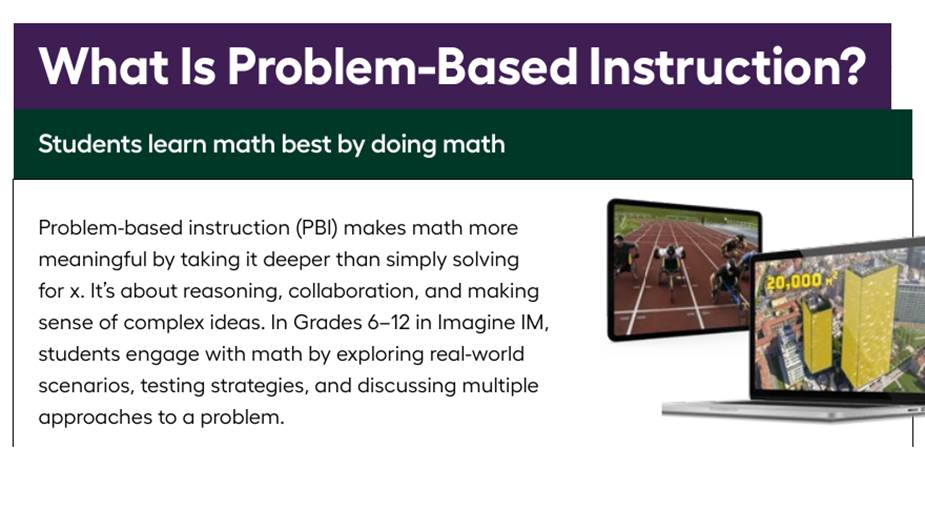
Use open-ended math problems to make students think
Open problems do not necessarily have many answers. The important point is that students have many ways to start, many representations or strategies that can be discussed. Instead of saying in advance what formula to use, the teacher can set a situation that forces students to determine the relationship between facts.
For example, before introducing a ratio recipe, the teacher could show two recipes for drinks with different quantities and ask which recipe is stronger. Students can use tables, diagrams, division, fractions, or refer to the same unit. After comparing new methods, formulas and processes are synthesized into common knowledge.
This organization helps the formula appear as a problem-solving tool, not as a line of symbols to be memorized. Students understand what they are calculating and have a basis for choosing formulas when the context changes.
Visual model helps connect formula to meaning
Visual models can be drawings, number lines, tables, line diagrams, graphs, area models, blocks or manipulatives. They help students see relationships that algebraic notation often makes abstract.
For example, when learning distribution, instead of just memorizing a(b + c) = ab + ac, students can observe a rectangle divided into two parts. The area of the whole is equal to the sum of the areas of the two parts, from which the distribution rule becomes an explainable and verifiable relationship.
The model should not stop at illustrating it beautifully. Teachers need to ask students to point out which number, variable or calculation each element in the model corresponds to, then gradually move from images to symbols and vice versa.
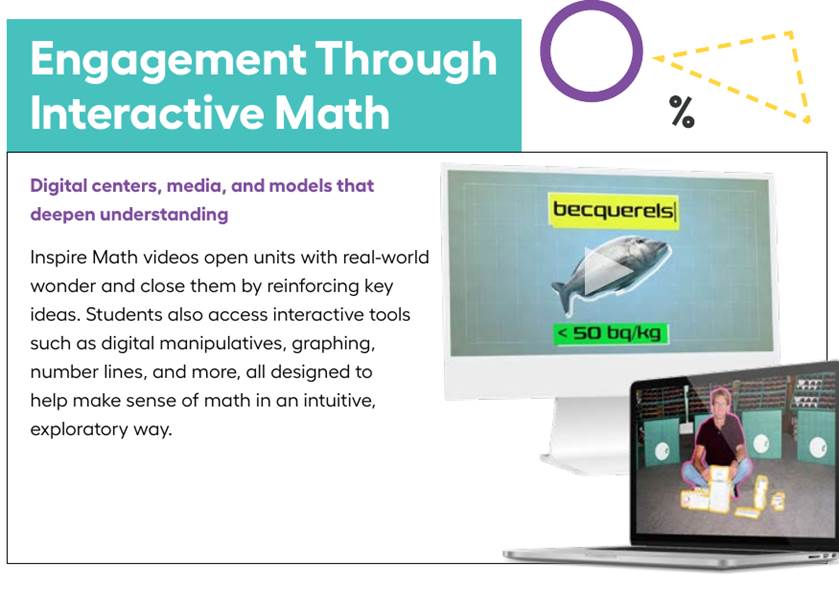
Digital visualization and interactive tools can help students quickly test multiple cases, change facts, and observe what stays the same. However, the value lies not in the effect on the screen but in the questions students must answer and the arguments they must present after the operation.
Use multiple representations to form understanding
Multiple representations - multiple representations helps students connect language, images, tables, graphs, and symbols. Each representation highlights a different aspect of the concept, while creating additional access points for students with different backgrounds and learning styles.
Teachers can ask students to convert a verbal situation into a diagram, from a diagram to a table, from a table to an expression, and finally explain the relationship between the forms. When students make this transition, knowledge is no longer tied to a single subject.
Change the way of asking: From “what is the answer?” to “why?”
The teacher's questions determine whether students will focus on the results or the thinking process. If most questions only ask for the last number, students will try to find the fastest way to get the answer. If teachers regularly ask about reasons, evidence, and connections, students understand that reasoning is also part of learning Math.
Some questions that can be used in class include:
1. What do you know from the topic and what do you need to look for?
2. Why did you choose this performance or formula?
3. Is there any other way to solve or check the results?
4. In what ways are these two methods similar and different?
5. If the facts change, how will the results or strategy change?
Teachers also need to spend time waiting for students to think, have them discuss in pairs before speaking and choose multiple works for the whole class to compare. Mistakes should be used as data to help clarify concepts, rather than just highlighted and ignored.
Imagine IM illustrates how to teach Mathematics to prioritize understanding the nature
A program that can be referenced for this orientation is Imagine IM, a K-12 Math program built according to problem-based instruction. The lesson not only provides a formula and requires practice, but also creates an opportunity for students to approach a problem worth thinking about, trying out strategies, exchanging and synthesizing knowledge.
In Imagine IM, students work with a variety of representations and instructional routines that support reasoning, mathematical discourse, and collaborative problem solving. The lesson structure often includes warm-up, classroom activities, synthesis and cool-down, helping students both explore and consolidate what they have learned.
It is worth noting that formulas and processes are still developed, but are placed in relation to concepts and situations. Thanks to that, procedural fluency is not separate from conceptual understanding, and the exercises aim to strengthen flexibility instead of just repeating one form.
The teacher's role in the problem-based classroom
Problem-based instruction is not meant to be left to students to fend for themselves. Teachers need to predict strategies that may appear, observe while students work, ask suggestive questions and choose suitable tasks for the synthesis section.
Teacher Guide and built-in supports in Imagine IM provide lesson objectives, suggested questions, pacing, scaffolds, and information about common misconceptions. This helps teachers focus on coordinating student thinking instead of having to build the entire process from scratch.
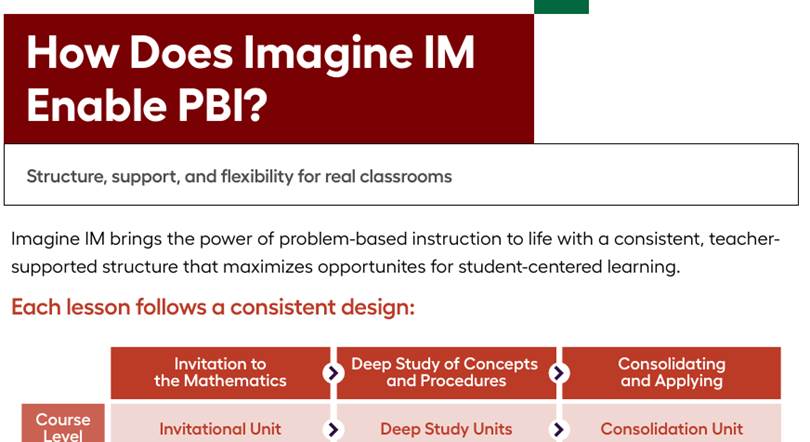
Possibility of implementation for schools
For schools, moving from lesson-based teaching to problem-based teaching needs to be seen as a professional development process, not just a matter of changing books. Teachers need time to get familiar with the lesson structure, how to select tasks for discussion, and how to use assessment to adjust the next lesson.
Imagine IM combines print and digital resources, classroom activities, assessments, and reporting data in one unified system. Schools can use a common structure to maintain coherence between classes, while also supporting teachers to differentiate and monitor students' understanding during the learning process.
When evaluating a Math program, schools should watch sample lessons directly and observe whether students receive explanations, use multiple representations, compare strategies, and apply knowledge to new problems. These are more important indicators than how many exercises or formulas the program provides.
Register for a free Trial account, demo book, quote:
Schools and teachers, please contact BooksVN, the designated distributor of Imagine Learning, in charge of countries including Vietnam, Philippines, Malaysia, Singapore, Hong Kong, Indonesia, India, Bangladesh, Cambodia, Laos, Japan and Taiwan through the following channels:
Website: www.booksvn.com Email: cs@booksvn.com
Mobile/WhatsApp: +84-915 920 514
Facebook: https://web.facebook.com/BooksVNeBooksachNgoaiVanchinhhang
Zalo OA: https://zalo.me/2230563715259512406
|
|


.svg)